Real-Time Vehicle Monitoring and Number Plate Recognition System on Edge Devices
Introduction and Objectives
Project Overview
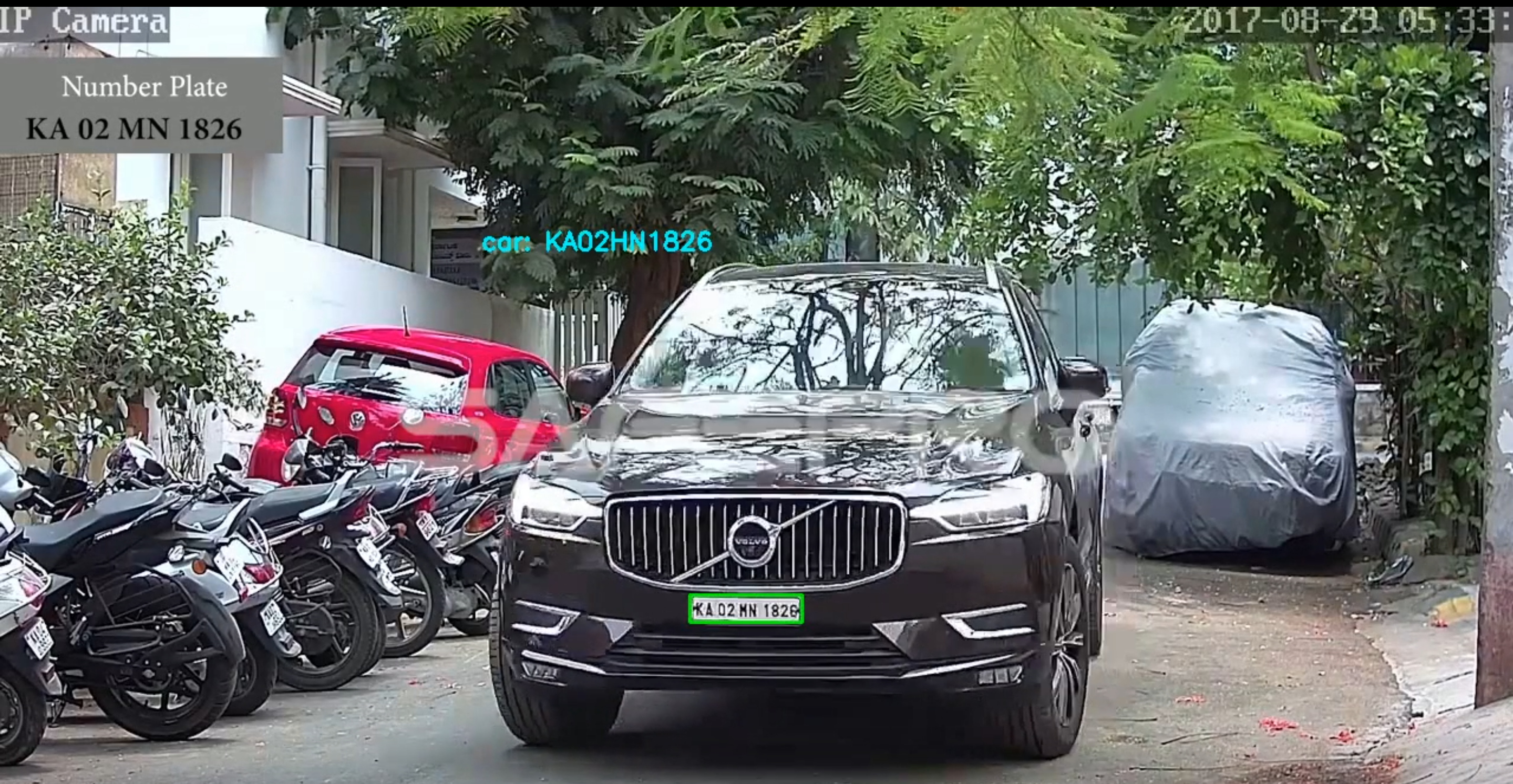
This project is focused on designing and deploying a comprehensive real-time vehicle monitoring and number plate recognition system using edge computing. The entire pipeline is optimized for hardware with limited resources using four lightweight deep learning models trained with YOLOv8 and PaddleOCR. These models are deployed on an edge device (e.g., NVIDIA Jetson Orin Nano), making the system suitable for smart gates, parking management, and surveillance.
Key Objectives
- Develop an end-to-end pipeline for real-time vehicle monitoring and license plate recognition.
- Use YOLOv8 and PaddleOCR models to maintain high accuracy with small model sizes (~200MB combined).
- Ensure low-latency, real-time performance on embedded edge devices.
- Record and store inference results locally in CSV or SQLite format.
- Design the system to be modular and scalable for deployment in toll gates, checkpoints, etc.
System Architecture and Inference Pipeline
Pipeline Components
| Task | Model | Format | Size |
|---|---|---|---|
| Vehicle Detection | YOLOv8 | .pt |
21.4 MB |
| Vehicle Type Classification | YOLOv8 | .pt |
9.79 MB |
| Number Plate Detection | YOLOv8 | .pt |
21.4 MB |
| Character Recognition | PaddleOCR | .pt |
96.5 MB |
Inference Pipeline Workflow
- Frame Capture: Real-time video stream from webcam or CCTV.
- Vehicle Detection: Detect vehicles using YOLOv8 object detector.
- Vehicle Type Classification: Classify each detected vehicle (e.g., car, truck, bike).
- Number Plate Detection: Detect plate region from cropped vehicle area.
- Character Recognition: Use PaddleOCR to recognize text from number plate.
- Record Results: Save timestamp, vehicle type, and plate number into a local CSV or database.
Sample Data Output Format
| Timestamp | Vehicle Type | Plate Number |
|---|---|---|
| 2025-04-30 10:25:43 | Truck | KA01AB1234 |
| 2025-04-30 10:25:45 | Bike | MH12XY9876 |
Edge Device Deployment
Device Selection for Deployment
Primary Recommendation: NVIDIA Jetson Orin Nano
- Supports GPU acceleration for PyTorch models.
- Compact and efficient for real-time edge AI inference.
- Easily handles 4 models totaling ~200MB in memory.
Implementation, Performance, and Future Scope
Deployment and Performance
- Models exported in PyTorch
.ptformat. - Inference run using Ultralytics Python package.
- Optimized preprocessing and post-processing for batch size = 1.
- Local result storage using CSV (extendable to SQLite/JSON).
System Performance Metrics
| Metric | Value |
|---|---|
| Inference Speed | ~5 FPS |
| Avg Latency per Frame | ~200 ms |
| Vehicle Detection Accuracy | > 90% |
| Vehicle Classification | ~88% |
| Plate Detection Accuracy | > 92% |
| OCR Accuracy | ~85–90% |
Future Improvements
- Add blacklisted vehicle alert system with local alarms.
- Quantize models for faster inference and reduced size.
- Build a simple GUI dashboard for visual feedback.
- Enable batch inference using stream queue architecture.
Conclusion
This project demonstrates a robust, real-time, and modular edge AI system for vehicle monitoring without relying on cloud infrastructure. It is optimized for cost-effective deployment, local data storage, and achieves high accuracy across all subtasks.