Smart Waste Segregation using Arduino BLE and Edge AI
Introduction
Waste segregation plays a crucial role in improving recycling efficiency and reducing environmental impact. Traditional methods of waste sorting are labor-intensive, slow, and inefficient. With the global increase in waste generation, the need for automated, efficient waste segregation has become critical.
This project aims to address the problem of manual waste sorting by developing an Edge AI system that automatically classifies and segregates waste materials. Using an Arduino Nano 33 BLE Sense Lite device and the OV7675 camera, the system aims to improve recycling rates, reduce landfill waste, and promote sustainability.
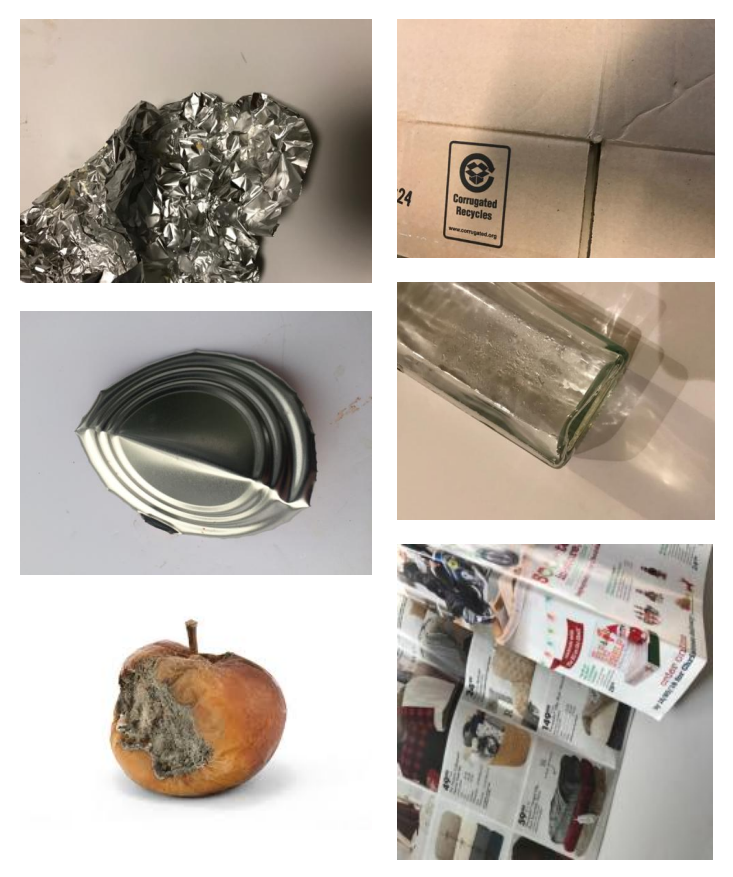
The world’s waste problem is escalating, with over 2 billion tons of solid waste generated annually. Most of this waste ends up in mixed bins, making recycling and waste management a challenge.
The lack of an efficient system to automatically segregate waste has led to the reliance on manual sorting, which is:
- Costly
- Slow
- Often inaccurate
This inefficiency results in recyclable materials being discarded, contributing further to environmental degradation.
Project Motivation
The motivation for this project is to leverage Edge AI and machine learning to develop an automatic waste segregation system that can classify and separate waste types such as:
- Cardboard
- Plastic
- Wet waste
This helps enhance recycling processes, reduce waste sent to landfills, and support a circular economy.
Challenges with BLE and OV7675 Camera
Using the Arduino Nano 33 BLE Sense Lite and the OV7675 camera presented several technical limitations that impacted the system’s performance and deployment feasibility.
A. Low Camera Resolution
The OV7675 camera has a resolution of 640x480 pixels, which is relatively low. This affects:
- Fine-grained image classification
- Object detail visibility
Solution:
- Used image preprocessing
- Downsampled images to 64x64 pixels
B. Limited RAM and ROM
The Arduino Nano 33 BLE Sense has:
- 1 MB flash memory
- 256 kB RAM
These constraints made it difficult to deploy a large image classification model.
Solution:
- Reduced the number of classes from six to three: cardboard, plastic, wet waste
- This allowed the model to fit into the limited memory with minimal accuracy loss
C. BLE’s Limited Processing Power
Although the BLE device uses a 32-bit ARM Cortex-M4 processor, it is not optimized for computationally intensive tasks like real-time image classification.
Solution:
- Used the EON compiler to optimize the model
- Chose quantized (int8) version of the model
- Resulted in:
- 18% reduction in RAM usage
- 15% reduction in ROM usage
Methodology
A. Hardware Required
| Component | Specifications |
|---|---|
| Arduino Nano 33 BLE Sense | 32-bit ARM Cortex-M4, 1MB Flash, 256KB RAM, low-power microcontroller |
| OV7675 Camera Module | 640x480 resolution, low-cost, suitable for basic image capture |
B. Software Used
- Edge Impulse Studio: Model training and deployment
- Arduino IDE: Programming and flashing the board
- Python: Image preprocessing
C. Data Collection
- Captured 691 images using a mobile phone over an A4 sheet
- Images manually labeled into 6 categories
- Performed 80-20 train-test split
- Uploaded dataset using Edge Impulse’s image data uploader
D. Model Development and Compression
- Enabled data augmentation
- Achieved:
- 100% training and validation accuracy
- 92% test accuracy
- Used EON compiler with int8 quantization
- Deployed model as Arduino library
- Ran live inference using:
edge-impulse-run-impulse
PROTOTYPE AND DEMO
A prototype of the smart waste segregation system was developed by integrating:
- Arduino Nano BLE Sense
- Edge AI image classification model
Features:
- Autonomous waste classification
- Real-time inference
- Accurate identification of:
- Cardboard
- Plastic
- Wet waste
Project Resources
- GitHub Repository: SmartWasteSegregator
Challenges and workarounds
| Challenge | Description | Solution |
|---|---|---|
| Data Variability | Lighting/background changes affected performance | Applied data augmentation to improve robustness |
| Memory Constraints | BLE device memory limited large model deployment | Used quantization (int8) and EON compiler |
| Low Camera Quality | OV7675’s resolution limited classification accuracy | Applied image resizing and preprocessing techniques |
Insights:
- Embedded ML development requires optimization trade-offs
- BLE-based inference is possible but constrained
- Importance of tooling like Edge Impulse and model compression
- Edge AI can make a real-world impact in sustainable technology
References
-
Nasir, T., Sindhura, S., & Sathvik, M. (2025). Smart Waste Segregation using Arduino BLE and Edge AI. Available Online
-
Edge Impulse, Inc. (2025). Edge AI for Embedded Systems. Available Online
-
Arduino. (2025). Arduino Nano 33 BLE Sense. Available Online
-
Fang, B., Yu, J., Chen, Z., et al. (2023). Artificial intelligence for waste management in smart cities: a review. Environmental Chemistry Letters, 21, 1959–1989. DOI Link
-
Gayathri, B., et al. (2023). Edge Computation Assisted Garbage Monitoring and Alerting System for a Smart City. In ICCCI 2023, Coimbatore, India, pp. 1-4. DOI: 10.1109/ICCCI56745.2023.10128268